Picture a Thursday evening in a family majlis somewhere in Dubai, Sharjah, Doha or Riyadh. Tea is poured, the children are running between rooms, and a mother quietly mentions that she noticed something “a little strange” a few weeks ago. Someone offers more dates. The conversation moves on. She does not bring it up again.
This scene plays out in Gulf homes far more often than we like to admit. As we mark Breast Cancer Awareness on 19 October, in the middle of Pink October, we want to talk about something that rarely makes it onto the campaign posters: not only the lump, but the silence around it, and the fear, guilt and loneliness that so often travel with it.
What the numbers tell us
Most of the figures below come from the UAE, but the family realities behind them will feel familiar across the GCC.
Key facts
- Breast cancer is the most common cancer among women in the UAE, and about one in eight women is expected to be diagnosed in her lifetime.
- Women in the UAE tend to be diagnosed younger than the global average. Research from Cleveland Clinic Abu Dhabi found that around a quarter of its breast cancer patients were under 40.
- When breast cancer is found early, survival rates are above 90%.
- Under Dubai Health Authority and Abu Dhabi Department of Health guidance, women aged 40 and over with average risk are advised to have a mammogram every two years. In Abu Dhabi, women aged 20 to 39 are advised to have a clinical breast exam every three years.
- Awareness is not the main gap. Nearly nine in ten Abu Dhabi residents say screening matters, yet many still delay it because of fear, procrastination or uncertainty.
That last point is the heart of this article. Many women know what to do. What stops them is not a lack of information, it is a feeling.
The word nobody wants to say
In many families, the word “cancer” is spoken in a whisper, or replaced with “that illness.” Add the privacy that surrounds a woman’s body, and breast health becomes one of the hardest subjects to raise at the dinner table.
Behind the silence are worries that are very real:
- “What will people say?” Fear of gossip, or of the family being looked at differently.
- Concern about a daughter’s future, including her marriage prospects, if the illness becomes known.
- Fear of how a husband will see her, or of becoming a burden on the household.
- The quiet belief that if it is never named, it may not be real.
The cost of this silence is high. Women delay appointments. Family history stays hidden, so nieces and daughters never learn their own risk. And the woman at the center faces her fears alone, in a house full of people.
Silence has never protected a family. Information, and support, can.
Faith and action walk together
For many women in our region, faith is a deep source of strength. Phrases like “Alhamdulillah” and trust in Allah’s decree carry people through the hardest days. But some women also quietly worry that going for screening, or feeling frightened, shows a lack of trust.
The well-known teaching to tie your camel and then place your trust in God says the opposite. Taking sensible steps is part of faith, not a break from it. Booking a mammogram is an act of responsibility toward yourself and the people who love you. And feeling afraid does not make anyone’s faith weak. Trusted elders, imams and community voices can be powerful allies in making this conversation feel safe.
The emotional journey no one prepares you for
Breast cancer is a physical illness, but it is lived emotionally from the very first appointment.
- Before and during screening: many women feel dread, and the days of waiting for results can be among the hardest.
- After a diagnosis: shock, numbness, anger and grief are common, often alongside guilt and the painful question, “Did I cause this?”
- During treatment: fatigue, body changes and hair loss can shake a woman’s sense of identity as a wife, mother, daughter and professional.
- The pressure to be strong: many women are the center of the household, the one who organizes everyone else. Being patient can feel like letting people down.
- Far from home: for expat families in the Gulf, a diagnosis may arrive without grandparents, sisters or lifelong friends nearby, and with the added stress of insurance, work and navigating care in a second language.
Anxiety and low mood are common among people facing cancer. They are not weaknesses, and they are not something to simply push through. They are real, and they can be helped.
For husbands, sons, brothers and fathers
Men are often the people who sit in the waiting room, drive to appointments and hold the family together. Your role matters more than you may realize. Some ways to help:
- Ask what she needs rather than deciding for her. Offer to come to appointments and respect it if she prefers to go with a sister or friend.
- Be honest with her. Hiding information “to protect her” can leave her feeling alone.
- Let her decide who is told and guard her privacy with the wider family.
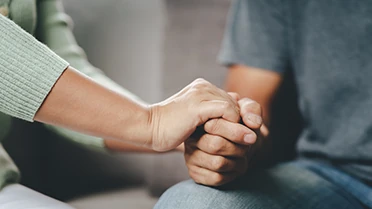
- Listen without rushing to fix. Sometimes “I am here” is enough.
- Look after yourself too. Caregiver exhaustion is real, and your own feelings deserve space.
A short note for men: breast cancer can affect men too, although it is rare. Any new lump deserves to be checked.
Talking with children and elders
Children notice more than we think. Use simple, honest words, reassure them that nothing they did caused the illness, and keep daily routines as steady as possible. With grandparents and older relatives, whose first response may be worry or advice about traditional remedies, it often helps to invite them into the process, perhaps by sharing the medical plan together, so that their love becomes support rather than pressure.
When to reach out for emotional support
You do not need to be in crisis to talk to someone. Consider speaking with a mental health professional if:
- Fear of results keeps you from booking, or attending, a screening.
- Worrying about cancer is affecting your sleep, appetite, work or relationships.
- You feel persistently low, hopeless, numb or have lost interest in things you usually enjoy.
- You are carrying guilt or shame about your health or your diagnosis.
- You are caring for someone with cancer and feel exhausted or overwhelmed.
If you ever feel unable to cope or have thoughts of harming yourself, please contact your local emergency number or go to the nearest hospital right away.
Check on the women in your life
This 19 October, do two things. Book the appointment or gently encourage someone you love to book it. And then ask her how she is really feeling and stay long enough to hear the answer.
At Camali Clinic, we believe that caring for the body and caring for the mind belong together. Whether you are facing challenges, living with a diagnosis, or supporting someone who is, our team is here to listen without judgement, in a confidential and respectful space.
Sources
Abu Dhabi Public Health Centre, “Check What Really Matters” breast cancer campaign (WAM, 2 October 2025) – wam.ae
Gulf News, Abu Dhabi launches ‘Check What Really Matters’ breast cancer campaign – gulfnews.com
Dubai Health Authority periodic screening guidance and Abu Dhabi DOH breast cancer screening standard, as reported in Gulf News coverage (October 2026)
The National, breast cancer survivors offer hope as screening push boosts health fight (9 October 2026) – thenationalnews.com
Cleveland Clinic Abu Dhabi, Late-stage breast cancer a growing concern in the UAE – clevelandclinicabudhabi.ae
Friends of Cancer Patients, Pink Caravan 2026 campaign launch (WAM, 24 September 2026) – wam.ae
Al Jalila Foundation, Pink October overview (one in eight lifetime risk) – via twinkl.com