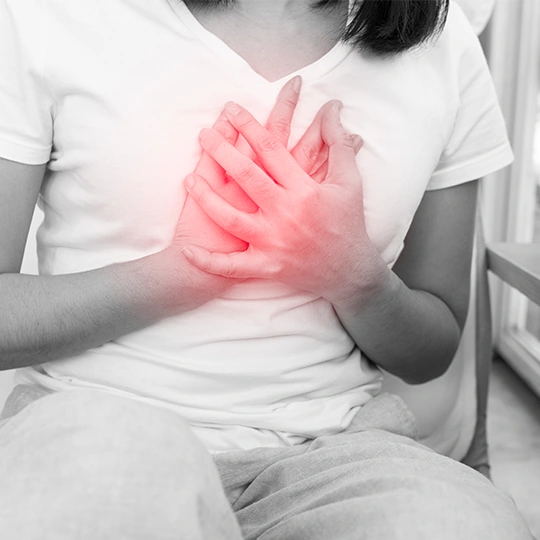
Panic Disorder develops when someone experiences recurrent unexpected panic attacks and becomes persistently worried about having further attacks or significantly changes their behaviour to avoid them. Panic disorder is highly treatable with the right specialist support.
01
Physical Symptoms
Racing or pounding heart (palpitations)
Shortness of breath or feeling smothered
Chest pain or discomfort
Trembling or shaking
Sweating
Nausea or stomach discomfort
Dizziness, lightheadedness, or feeling faint
Numbness or tingling sensations
Chills or hot flushes
02
Cognitive Symptoms
Derealisation (feeling detached from surroundings) or depersonalisation (feeling detached from oneself)
Fear of losing control, 'going crazy', or dying
Fear of having a heart attack
03
Treatment Approaches
Cognitive Behavioural Therapy (CBT) for panic disorder – psychoeducation about the panic cycle, cognitive restructuring, and interoceptive exposure (facing feared bodily sensations)
Breathing and relaxation techniques – managing acute symptoms
Graduated exposure – to avoided situations (including agoraphobia where present)
Psychiatry review for medication where appropriate (SSRIs are first-line)
04
How Panic Becomes a Cycle
Physical sensations → catastrophic interpretation → increased fear → more sensations
Safety behaviours (avoidance, reassurance, checking) temporarily reduce anxiety but maintain the fear long-term
We work directly with this cycle to reduce sensitivity and rebuild confidence
05
How We Help at Camali Clinic
Understanding panic physiology and why sensations feel dangerous
Reducing fear of bodily sensations and breaking the panic cycle
Addressing avoidance and safety behaviours that maintain panic
Building coping skills for high-stress moments
Medication review where clinically appropriate, alongside therapy
06
Therapeutic Approaches for Panic Attacks
CBT for panic (thought patterns and fear of sensations)
Interoceptive exposure (gradual exposure to sensations in a safe way)
Breathing and grounding strategies
Mindfulness-based techniques to reduce reactivity
Lifestyle and stress support to reduce overall vulnerability
07
Outpatient Outcomes
Fewer panic attacks and reduced intensity
Reduced avoidance and improved independence
Increased confidence in public spaces and daily activities
Better stress tolerance and emotional regulation
Effective outpatient care without hospital admission
Who needs it?
Who this service is for
We offer support to panic disorder in adults, characterized by:
Recurrent unexpected panic attacksFear of having further attacksAvoidance of situations that may trigger panic attacks or lead to embarrassment due to loss of control or unpredictable panic symptoms, including agoraphobia,Fear of certain body sensations that occur during panic attacks, such as a pounding heart and dizzinessPanic attacks with accompanying anxiety, health anxiety, or depressionPatients who have already been examined in a hospital emergency department for panic attacks and ruled out any cardiac or medical conditions
Our Team
We are here to guide you
Meet the specialists who bring compassion, knowledge, and experience to every aspect of care.
Camali Clinic offers compassionate psychiatric, psychology, and therapy services for all ages. Experience personalised care from our mental health experts.